Last Updated on July 8, 2026
High histamine foods can quietly trigger a surprising number of symptoms in people whose bodies already struggle to break histamine down efficiently.
I see this all the time with clients. Someone comes in thinking they suddenly developed a bunch of random sensitivities. Their sinuses are congested, they get headaches after meals, their skin reacts to foods that never bothered them before, and their digestion feels unpredictable.
Often, the missing piece is histamine.
Certain foods naturally contain higher levels of histamine, while others become higher in histamine through fermentation, aging, curing, smoking, canning, or storage. If your system is already overloaded, these foods can push you past your tolerance threshold and trigger symptoms.
If you’re not sure whether histamine is affecting you, make sure you also review this list of histamine allergy symptoms.
Today I’m sharing the foods highest in histamine, why they can trigger reactions, three honorable mentions that can fill your histamine bucket, and what to do if your body is struggling to tolerate them.
You’ll learn:
- What Are High Histamine Foods?
- Symptoms High Histamine Foods Can Trigger
- Foods Highest in Histamine
- Honorable Mentions That Fill Your Histamine Bucket
- What To Do If High Histamine Foods Trigger Symptoms
What Are High Histamine Foods?
High histamine foods are foods that contain histamine or become higher in histamine because they are aged, fermented, cured, smoked, canned, spoiled, or stored too long.
Histamine itself is not bad. Your body uses histamine for immune function, digestion, stomach acid, brain signaling, and inflammatory responses. The problem happens when histamine builds faster than your body can break it down.
This is often referred to as histamine intolerance, where the body struggles to clear excess histamine efficiently. Research describes histamine intolerance as a mismatch between accumulated histamine and the body’s ability to degrade it, often involving enzymes like DAO. You can read more in this review on histamine intolerance.
I like to think of histamine like a bucket. A little histamine is normal. But when your bucket gets too full, symptoms start spilling over.
Symptoms High Histamine Foods Can Trigger
Histamine symptoms can show up in different systems, which is why they often feel random. One person gets headaches. Another gets hives. Another gets reflux, anxiety, insomnia, bloating, or sinus pressure.
Common symptoms can include:
- Headaches or migraines
- Sinus congestion, runny nose, or sneezing
- Skin flushing, itching, hives, or rashes
- Digestive discomfort, bloating, diarrhea, nausea, or reflux
- Rapid heartbeat or palpitations
- Brain fog, dizziness, or fatigue
- Anxiety, irritability, or restless sleep
- Puffiness, water retention, or inflammation flares
- Worse PMS, cramps, or hormone-related symptoms
If these symptoms sound familiar, review the full list of histamine symptoms to see how your body may be affected.
Foods Highest in Histamine
Histamine levels can vary depending on freshness, storage, fermentation, bacteria, and processing. Still, these are the food categories I would watch first if histamine symptoms are flaring.
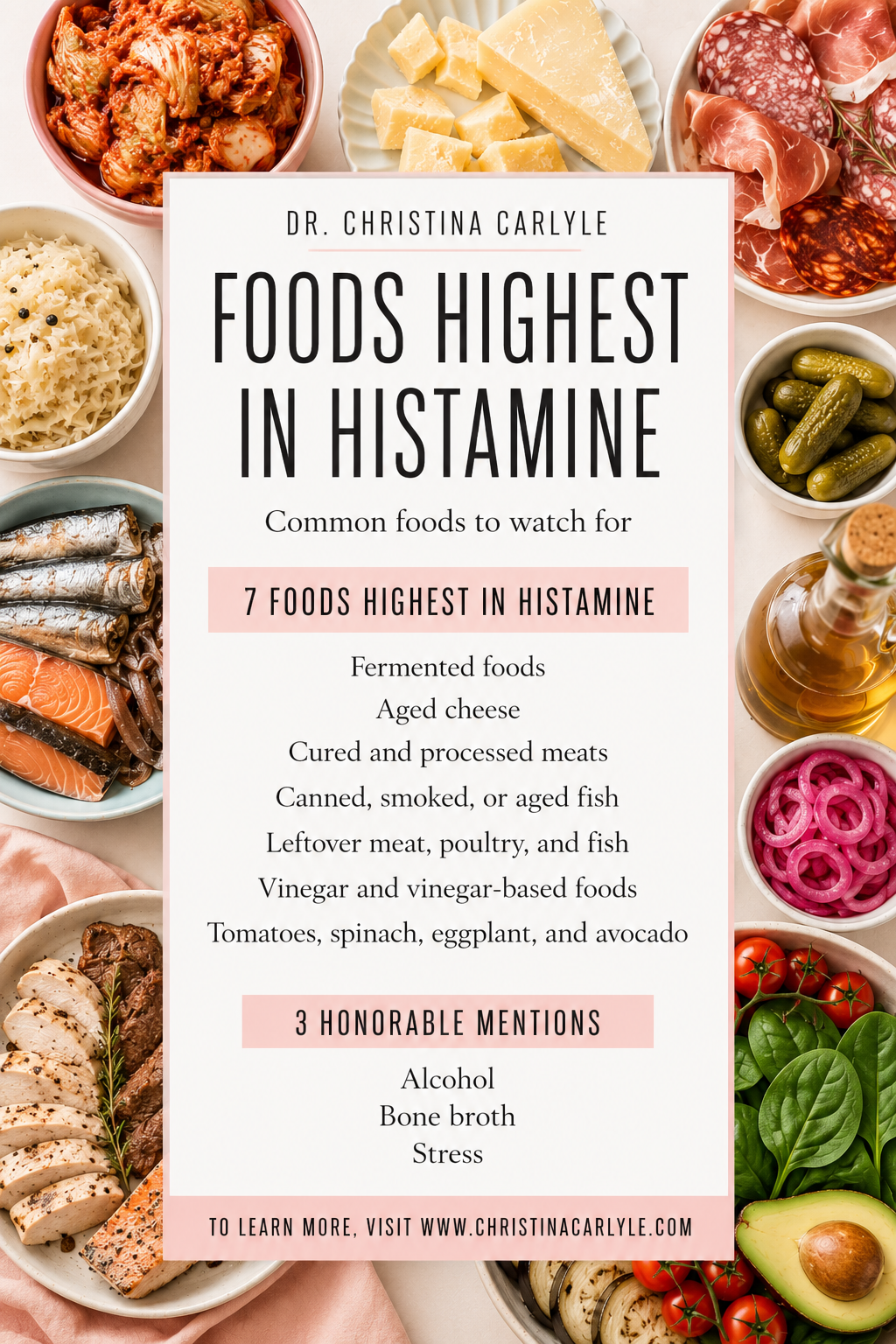
1. Fermented Foods
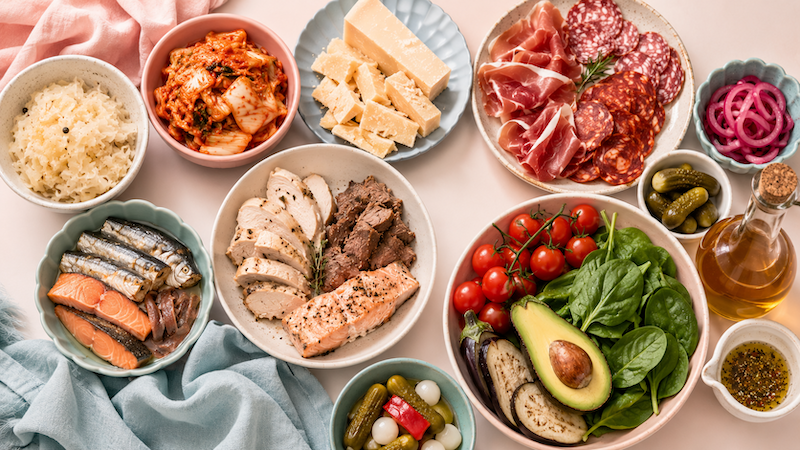
Fermented foods are some of the biggest high histamine foods because bacteria can produce histamine during fermentation. This includes sauerkraut, kimchi, kombucha, kefir, yogurt, miso, tempeh, soy sauce, and fermented pickles.
These foods are often promoted for gut health, and they can be helpful for some people. But if your histamine bucket is already full, fermented foods can make symptoms worse. Research on biogenic amines in fermented foods explains how compounds like histamine can accumulate during fermentation.
2. Aged Cheeses
Aged cheeses like parmesan, cheddar, gouda, blue cheese, brie, and aged goat cheese can be high in histamine because histamine builds as foods age and mature.
If cheese makes you congested, itchy, flushed, bloated, headachy, or puffy, histamine may be part of the reason. Fresh dairy may be tolerated better by some people, but during a flare, I usually keep dairy simple or pause it temporarily.
3. Cured and Processed Meats
Cured and processed meats like salami, pepperoni, prosciutto, bacon, sausage, deli meat, hot dogs, and smoked meats can be higher in histamine and other biogenic amines. These foods are salted, cured, smoked, aged, or preserved, which makes them more likely to bother sensitive bodies.
Freshly cooked chicken, turkey, beef, or eggs are usually better options when you are trying to lower histamine load.
4. Canned, Smoked, or Aged Fish
Fish is one of the most important categories to understand because histamine can form when certain fish are not kept cold enough or are stored too long. Tuna, mackerel, sardines, anchovies, smoked salmon, and canned fish are common concerns.
The FDA explains that histamine can form in fish when bacteria grow because of time and temperature issues.
If you eat fish during a histamine flare, choose very fresh or properly frozen fish and skip canned, smoked, dried, or aged options.
5. Leftover Meat, Poultry, and Fish
Leftovers surprise people, but they matter. Histamine can increase in protein foods as they sit in the fridge. That means leftover chicken, turkey, beef, pork, or fish may bother you more than the exact same food freshly cooked.
If you are histamine-sensitive, cook smaller portions or freeze leftovers right away. Reheating from frozen is often better than letting cooked protein sit in the fridge for days.
6. Vinegar and Vinegar-Based Foods
Vinegar is fermented, so vinegar-based foods can be a problem for people with histamine issues. This includes balsamic vinegar, apple cider vinegar, wine vinegar, pickled vegetables, mustard, ketchup, mayonnaise, salad dressings, and many sauces.
This is one reason someone can eat a beautiful salad and still feel awful afterward. It may not be the lettuce. It may be the vinegar-based dressing, tomatoes, avocado, or leftover protein sitting on top.
7. Tomatoes, Spinach, Eggplant, and Avocado
Tomatoes, spinach, eggplant, and avocado are nutritious foods, but they are common troublemakers for histamine-sensitive people. They are often listed as higher histamine foods or histamine-triggering foods, and a study on histamine levels in foods notes high histamine levels in foods including tuna, mackerel, anchovy, spinach, wine, cheese, sausage, and fermented foods.
If symptoms are flaring, try swapping spinach for romaine, arugula, or butter lettuce. Swap tomatoes for cucumber, carrots, or zucchini. Pause avocado for a couple of weeks and see if your body feels calmer.
Honorable Mentions: Things That Fill Your Histamine Bucket
These are not all foods, but they absolutely matter. I think of them as histamine bucket fillers. They may not be the main problem for everyone, but they can make reactions more likely.
Alcohol
Alcohol is not a food, but it deserves a big warning label here. Wine, champagne, beer, and other fermented alcohols can contain histamine and may also interfere with histamine breakdown. This is why some people feel flushed, itchy, puffy, congested, anxious, headachy, or wired after drinking.
If histamine symptoms are active, alcohol is one of the first things I would remove for a few weeks. I say this with love and a tiny side-eye at red wine.
Bone Broth
Bone broth is tricky because it is often promoted as gut-healing, but it can be rough for histamine-sensitive people. It is usually cooked for a long time, made from animal protein, and stored as leftovers, which can make it harder to tolerate during a flare.
If bone broth makes you feel itchy, puffy, flushed, congested, anxious, headachy, or bloated, pause it. You may do better with freshly cooked protein and quick soups made with fresh ingredients.
Stress
Stress is not a food, obviously, but it can absolutely affect histamine symptoms. Mast cells are immune cells that release histamine, and stress can make mast cells more reactive. Research on stress and mast cell activation helps explain why symptoms can flare when your nervous system is overloaded.
This is why you may tolerate a food one week and react to it the next. The food may be the same, but your bucket is not. Poor sleep, stress, hormones, pollen, gut inflammation, alcohol, and leftovers can all stack up.
What To Do If High Histamine Foods Trigger Symptoms
If you suspect high histamine foods are contributing to your symptoms, start by reducing the biggest triggers for two to three weeks.
That usually means pausing fermented foods, aged cheese, cured meats, smoked or canned fish, leftovers, vinegar-based foods, alcohol, and bone broth. Many people also feel better temporarily reducing tomatoes, spinach, eggplant, and avocado.
During that time, focus on fresher options found in this list of foods lower in histamine.
Some people also benefit from supporting the enzyme responsible for breaking histamine down. I explain how that works in this article on DAO supplements.
But the long-term goal is not avoiding more and more foods forever. The goal is finding out why your histamine bucket is overflowing in the first place. Gut health, inflammation, mold exposure, nutrient deficiencies, hormone shifts, stress, and detox pathways can all play a role.
If you want to start improving how your body processes food reactions and inflammation, take the Metabolic Type Quiz to discover which eating style works best for your metabolism.
My Final Thoughts about High Histamine Foods
High histamine foods can trigger frustrating symptoms when your body’s ability to process histamine becomes overwhelmed. Fermented foods, aged cheeses, cured meats, canned or smoked fish, leftovers, vinegar-based foods, tomatoes, spinach, eggplant, and avocado are some of the biggest foods to watch.
Alcohol, bone broth, and stress can also fill your histamine bucket, which is why symptoms can feel inconsistent or random.
Start by learning your triggers, lowering your histamine load, and supporting the deeper systems that help your body process histamine, including gut health, metabolism, inflammation, detoxification, and nervous system regulation.
I hope this article helped you.
If you have any questions, let me know in the comments.
Forever rooting for you,
Dr. Christina Carlyle

Metabolic Type Meal Plan Results
Eating Healthy But Not Seeing Results?
The solution is eating for your unique metabolic type - When you eat foods that match your Metabolic Type you can lose weight and feel great 3 times faster. Take the Metabolic Type Quiz to discover your type and the meal plan that's best for you.
TAKE THE QUIZIf you liked this article, you’ll also like these posts

Dr. Christina Carlyle is a Doctor of Functional Medicine, FDN-P, Nutritionist, & Trainer who transformed her body and health – getting off 7 medications and losing 40 pounds for good. Now, she helps other women get happy, healthy, and fit – quickly & naturally – without any BS