Last Updated on March 16, 2026
Today w’ere discussing Histamine Intolerance… so you understand What It Is, Why It Happens, and Why Your Body Suddenly Feels Reactive.
Histamine intolerance is something I see constantly with my clients. But it’s also something I’ve personally dealt with, and something I’ve watched family members and friends struggle with too.
Which is exactly why I wanted to write this post all about histamine intolerance.
Because histamine issues can feel confusing as hell when you’re in the middle of them.
You start noticing little things at first.
Maybe wine suddenly gives you a headache.
Maybe your skin gets itchy after certain foods.
Maybe your nose is constantly stuffy, you’re clearing your throat all the time, or you get random headaches or digestive flare ups that seem to come out of nowhere.
Then one day you’re sitting there wondering why your body suddenly reacts to everything.
If that sounds familiar, you’re not crazy and you’re definitely not alone.
Histamine issues are incredibly common, especially in women whose bodies are already dealing with inflammation, stress, gut dysfunction, and hormone fluctuations.
When those systems start getting overwhelmed, histamine can build up faster than your body can clear it. And that’s when symptoms start showing up in all kinds of annoying ways.
If you’re already experiencing things like headaches, sinus issues, skin reactions, digestive symptoms, or random inflammation, make sure you check out this list of histamine allergy symptoms. It will help you recognize whether histamine overload could be part of what’s going on.
In this post I’m going to walk you through what histamine actually is, what histamine intolerance means, why histamine builds up in the body, the root causes I see driving it with my clients, and what you can start doing about it.
Table of Contents
- What Histamine Is
- What Histamine Intolerance Is
- Why Histamine Builds Up
- Root Causes of Histamine Intolerance
- Other Factors That Can Contribute to High Histamine
- What To Do If You Suspect Histamine Intolerance
What Histamine Is
Histamine gets blamed for a lot of things, but it’s actually not the villain people think it is.
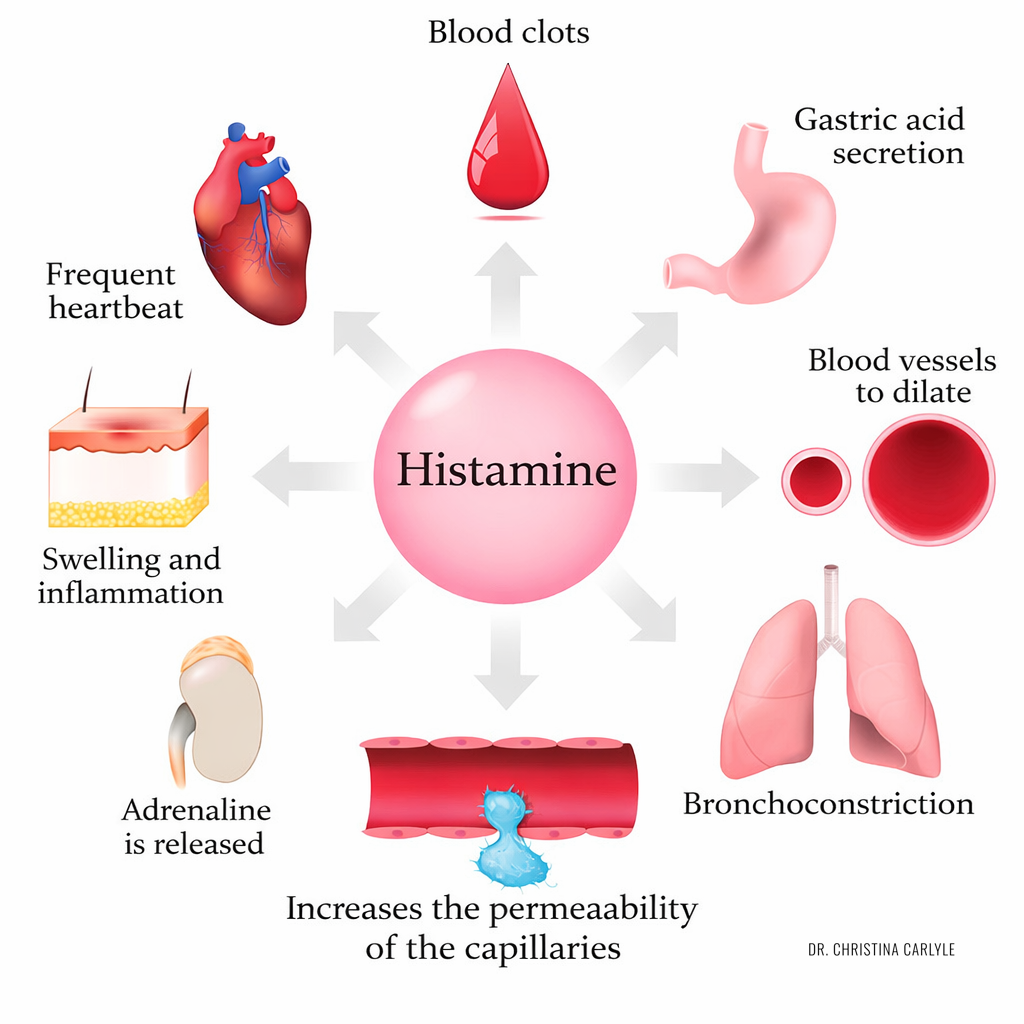
Histamine is a natural chemical your body produces. Histamine plays an important role in the immune system, digestion, and communication between your brain and your body.
In healthy amounts, histamine helps your body do important things like:
Support immune defense
Stimulate stomach acid for digestion
Help the brain communicate with the nervous system
Respond to potential threats like allergens
When your body encounters something it thinks might be harmful, like pollen or certain foods, it releases histamine as part of the inflammatory response.
That’s what causes many of the classic allergy symptoms people recognize.
Histamine itself isn’t the problem.
The issue starts when histamine builds up faster than your body can break it down.
What Histamine Intolerance Is
Histamine intolerance happens when your body struggles to clear histamine efficiently.
Normally, histamine gets broken down by enzymes in the gut and liver. One of the most important enzymes responsible for this process is called diamine oxidase, often shortened to DAO.
When DAO levels are low or the body is producing too much histamine, excess histamine starts circulating through the body instead of being cleared.
That’s when symptoms start showing up.
Many people assume they’ve suddenly developed new allergies or food sensitivities, when in reality their body just isn’t processing histamine efficiently anymore.
And because histamine affects multiple systems in the body, the symptoms can show up in ways that feel completely unrelated.
Why Histamine Builds Up
Histamine overload usually develops gradually.
Most people don’t wake up one morning with histamine intolerance. Instead, it builds slowly as different systems in the body start getting overwhelmed.
Histamine can build up when:
Your body produces too much histamine
Your gut bacteria produce excess histamine
Your body isn’t producing enough DAO enzyme
Your liver detox pathways become sluggish
Chronic inflammation keeps your immune system activated
This is also one of the reasons people often notice that allergies seem to get worse as they get older.
When metabolism slows down, stress accumulates, gut health declines, and detox pathways become less efficient, the body simply can’t keep up with histamine the way it used to.
Root Causes of Histamine Intolerance
Histamine intolerance is rarely caused by just one thing.
Most of the time it’s the result of multiple systems being under stress at the same time.
Some of the most common root causes I see include:
Gut dysfunction and microbiome imbalance
Chronic inflammation
Poor liver detoxification
Low DAO enzyme production
Metabolic dysfunction
Long periods of stress and nervous system dysregulation
Frequent food sensitivities or inflammatory diets
When these systems are overwhelmed, histamine clearance slows down and symptoms start stacking up.
This is also why simply avoiding certain foods forever rarely fixes the problem. The goal isn’t just to remove triggers. The goal is to support the systems responsible for processing histamine.
Other Factors That Can Contribute to High Histamine
In addition to the root causes above, there are a few other biological factors that can make histamine issues worse for some people.
One of those is a condition called mast cell activation syndrome (MCAS). Mast cells are immune cells that release histamine during inflammatory responses. In people with MCAS, those cells can become overly reactive and release histamine too easily.
Hormones can also play a role. Estrogen in particular has a complicated relationship with histamine. Histamine can stimulate estrogen production, and estrogen can trigger mast cells to release more histamine. This feedback loop is one of the reasons many women notice allergy symptoms, headaches, or inflammation worsen at certain times in their cycle.
I explain this relationship in more detail in this article on histamine and estrogen.
What To Do If You Suspect Histamine Intolerance
If histamine overload might be contributing to your symptoms, there are a few smart steps to start with.
First, look at whether your symptoms match common histamine reactions by reviewing this list of histamine allergy symptoms.
Second, cleaning up your diet can help reduce the amount of histamine your body has to process. That usually means temporarily focusing on low histamine foods while avoiding triggers found in high histamine foods.
But here’s the piece most people miss.
Histamine reactions often get worse when your metabolism, gut health, and detox pathways are under stress.
One of the most effective ways to start calming that inflammatory cascade is by eating in a way that supports your metabolism.
Different bodies respond differently to food, and when you start eating in alignment with your metabolic type, your body can regulate inflammation, hormones, and digestion much more efficiently.
If you want to figure out the best nutrition strategy for your body, take the Metabolic Type Quiz to discover which eating style works best for you.
My Final Thoughts on Histamine Intolerance
If your body has been feeling increasingly reactive, histamine intolerance may be a piece of the puzzle.
I’ve seen this pattern with countless clients, and I’ve watched friends and family struggle with it too. It can feel incredibly frustrating when foods you used to tolerate suddenly start triggering symptoms.
The good news is that the body is incredibly adaptable when you support the systems responsible for digestion, detoxification, metabolism, and inflammation.
Avoiding triggers can help temporarily, but long term improvement usually comes from repairing the underlying imbalances that allowed histamine to build up in the first place.
Start by understanding your symptoms, clean up the biggest triggers, and focus on rebuilding metabolic health so your body can process histamine the way it was designed to.

Metabolic Type Meal Plan Results
Eating Healthy But Not Seeing Results?
The solution is eating for your unique metabolic type - When you eat foods that match your Metabolic Type you can lose weight and feel great 3 times faster. Take the Metabolic Type Quiz to discover your type and the meal plan that's best for you.
TAKE THE QUIZYou deserve to feel good in your body again.

If you liked this article, you’ll also like these posts
- Histamine Allergy Symptoms
- High Histamine Foods
- Low Histamine Foods
- DAO Supplements
- MCAS
- Natural Allergy Relief: Holistic Allergy Treatments that Work

Dr. Christina Carlyle is a Doctor of Functional Medicine, FDN-P, Nutritionist, & Trainer who transformed her body and health – getting off 7 medications and losing 40 pounds for good. Now, she helps other women get happy, healthy, and fit – quickly & naturally – without any BS