
Last Updated on March 16, 2026
MCAS, or Mast Cell Activation Syndrome, is something I see more and more often with my clients, especially in people who feel like their bodies have suddenly become reactive to everything.
Many of my clients describe the same frustrating experience. Their skin becomes sensitive, they get headaches after meals, their sinuses stay congested, their digestion becomes unpredictable, and they feel like their body reacts to foods or environmental triggers that never used to bother them.
I’ve seen this with clients, friends, and even within my own family. When symptoms seem scattered and inconsistent, mast cells are often part of the conversation.
If you’ve been dealing with symptoms like flushing, rashes, digestive discomfort, or unexplained reactions, there’s a good chance mast cells and histamine may be involved.
If you’re wondering whether your symptoms may be related to histamine, make sure you review this list of histamine allergy symptoms.
In this article, I’m breaking down what MCAS is, how mast cells affect histamine levels, why mast cell activation happens, and what you can do if your body feels overly reactive.
Table of Contents
- What Is MCAS?
- What Are Mast Cells?
- Common MCAS Symptoms
- Why Mast Cell Activation Happens
- What To Do If You Suspect MCAS
What Is MCAS?
MCAS stands for Mast Cell Activation Syndrome. It describes a condition where mast cells release inflammatory chemicals too frequently or too aggressively.
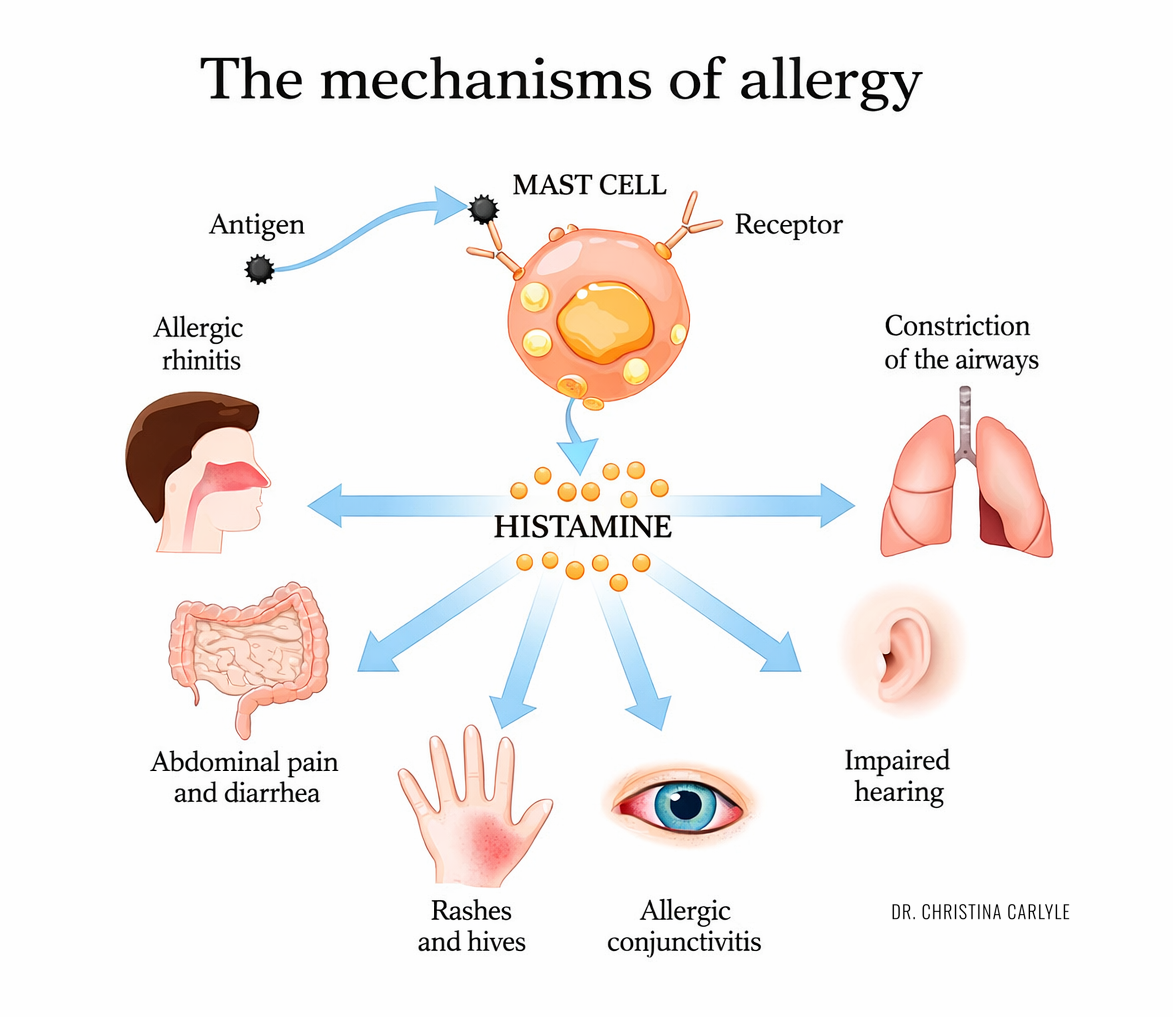
Mast cells are immune cells that normally help protect the body from infection and environmental threats. When they detect something potentially harmful, they release chemical messengers such as histamine.
Histamine helps coordinate immune responses, but when mast cells become overactive, they can release histamine excessively.
This can lead to symptoms affecting the skin, digestion, nervous system, and cardiovascular system.
In many cases, MCAS overlaps with histamine intolerance because mast cells are one of the main sources of histamine in the body.
What Are Mast Cells?
Mast cells are specialized immune cells located throughout the body, particularly in tissues that interact with the outside world.
They are found in areas like:
- The skin
- The digestive tract
- The respiratory system
- The nervous system
When mast cells detect something they interpret as a threat, they release chemicals including:
- Histamine
- Cytokines
- Prostaglandins
- Leukotrienes
These chemicals trigger inflammation and immune responses designed to protect the body.
However, when mast cells become overly sensitive or unstable, they may release these chemicals in response to everyday triggers like foods, stress, temperature changes, or environmental exposures.
Common MCAS Symptoms
Mast cell activation can produce a wide range of symptoms because mast cells exist throughout many body systems.
Some of the most common symptoms include:
- Skin flushing
- Rashes or hives
- Itchy skin
- Sinus congestion
- Headaches
- Digestive discomfort
- Heart palpitations
- Dizziness
- Anxiety or nervous system sensitivity
- Brain fog
Many of these symptoms overlap with high histamine reactions.
If you’re experiencing several of these symptoms together, reviewing the full list of histamine symptoms can help you recognize whether histamine may be affecting your body.
Why Mast Cell Activation Happens
Mast cells become reactive for a variety of reasons.
In my experience working with clients, mast cell activation is often connected to underlying imbalances affecting metabolism, gut health, and inflammation.
Some of the most common contributing factors include:
- Chronic gut inflammation
- Microbiome imbalance
- Environmental toxin exposure
- Hormonal shifts
- Chronic stress
- Nervous system dysregulation
- High histamine diets
Food choices can also play a role.
Certain foods contain higher levels of histamine or can trigger mast cells to release histamine.
You can review examples of these foods in this article on foods high in histamine.
Some people also find symptom relief by temporarily emphasizing foods that are lower in histamine while addressing the root causes driving mast cell reactivity.
What To Do If You Suspect MCAS
If mast cell activation may be contributing to your symptoms, the goal is not simply avoiding more and more foods.
The goal is stabilizing the immune system and reducing the factors that are driving mast cell reactivity.
This often includes supporting gut health, improving metabolic resilience, and reducing systemic inflammation.
Some people also benefit from supporting enzymes responsible for histamine breakdown. I discuss these options in more detail in this article about DAO supplements.
But long-term improvements usually happen when you support the systems responsible for regulating inflammation and immune responses.
If you want to improve how your body processes inflammation and food reactions, take the Metabolic Type Quiz to discover which eating style best supports your metabolism.
My Final Thoughts on MCAS
MCAS can feel confusing because the symptoms often appear unrelated at first.
But when mast cells become overly reactive, they can influence many different systems in the body.
Understanding the connection between mast cells, histamine, and metabolism can help explain why symptoms like headaches, rashes, digestive issues, and sinus congestion often appear together.
When you focus on supporting your metabolism, calming inflammation, and restoring gut health, the body becomes far more resilient.

Metabolic Type Meal Plan Results
Eating Healthy But Not Seeing Results?
The solution is eating for your unique metabolic type - When you eat foods that match your Metabolic Type you can lose weight and feel great 3 times faster. Take the Metabolic Type Quiz to discover your type and the meal plan that's best for you.
TAKE THE QUIZYou deserve to feel stable and comfortable in your body again.
If you liked this article, you’ll also like these posts
- Histamine Intolerance
- Histamine Allergy Symptoms
- High Histamine Foods
- Low Histamine Foods
- DAO Supplements
- Natural Allergy Relief

Dr. Christina Carlyle is a Doctor of Functional Medicine, FDN-P, Nutritionist, & Trainer who transformed her body and health – getting off 7 medications and losing 40 pounds for good. Now, she helps other women get happy, healthy, and fit – quickly & naturally – without any BS