
Last Updated on March 16, 2026
Low histamine foods can make a big difference for people whose bodies are struggling to break histamine down efficiently.
I see this all the time with my clients. Someone starts noticing headaches or bloating after meals, persistent sinus congestion, itchy skin, digestive discomfort, or that strange feeling that their body suddenly reacts to foods that used to feel perfectly fine.
Friends, family members, and many of the women I work with describe the same experience. Their bodies start feeling increasingly reactive and they can’t quite figure out why.
Often, histamine buildup is part of the picture.
While addressing the root causes of histamine intolerance is essential for long-term healing, temporarily focusing on foods that are naturally lower in histamine can help calm symptoms while your body recovers.
If you’re not sure whether histamine might be contributing to your symptoms, start by reviewing this list of histamine allergy symptoms.
In this article, I’m sharing a practical list of low histamine foods, why freshness matters more than most people realize, and how to build meals that are less likely to trigger histamine reactions.
Table of Contents
- What Are Low Histamine Foods?
- Low Histamine Foods List
- Why Fresh Foods Matter for Histamine
- How to Build Low Histamine Meals
- What To Do If Symptoms Continue
What Are Low Histamine Foods?
Low histamine foods are foods that naturally contain very little histamine and are less likely to trigger histamine release in the body.
Histamine itself is a natural chemical involved in immune responses, digestion, and inflammation. Under normal circumstances, enzymes like DAO help break histamine down so it doesn’t accumulate.
But when histamine levels rise faster than the body can process it, symptoms can develop. This is commonly referred to as histamine intolerance.
Choosing foods that are naturally lower in histamine can help reduce the overall histamine load in the body and give your system a chance to calm down while you address the deeper causes.
Low Histamine Foods List
Many fresh, minimally processed foods tend to contain lower levels of histamine and are often better tolerated by people with histamine sensitivity.
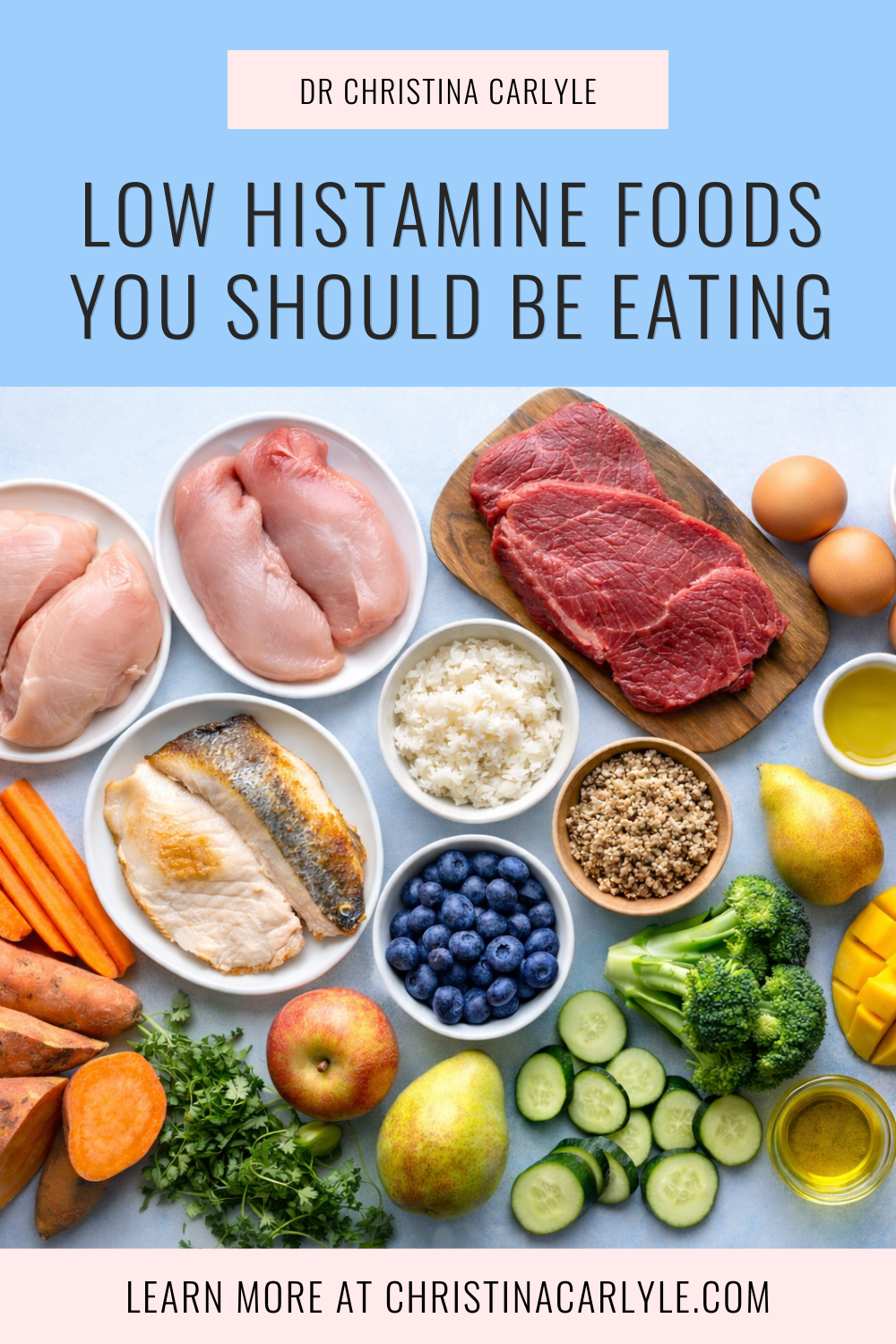
Some common foods that are typically lower in histamine include:
- Fresh chicken
- Fresh turkey
- Fresh beef
- Freshly cooked fish
- Eggs*
- Rice
- Quinoa
- Sweet potatoes
- Carrots
- Zucchini
- Cucumbers
- Broccoli
- Apples
- Blueberries
- Pears
- Mango
- Olive oil
- Coconut oil
*Eggs are often considered low histamine, but some people react to egg whites because they can stimulate histamine release. Many people tolerate egg yolks better and may choose to start there if they are sensitive.
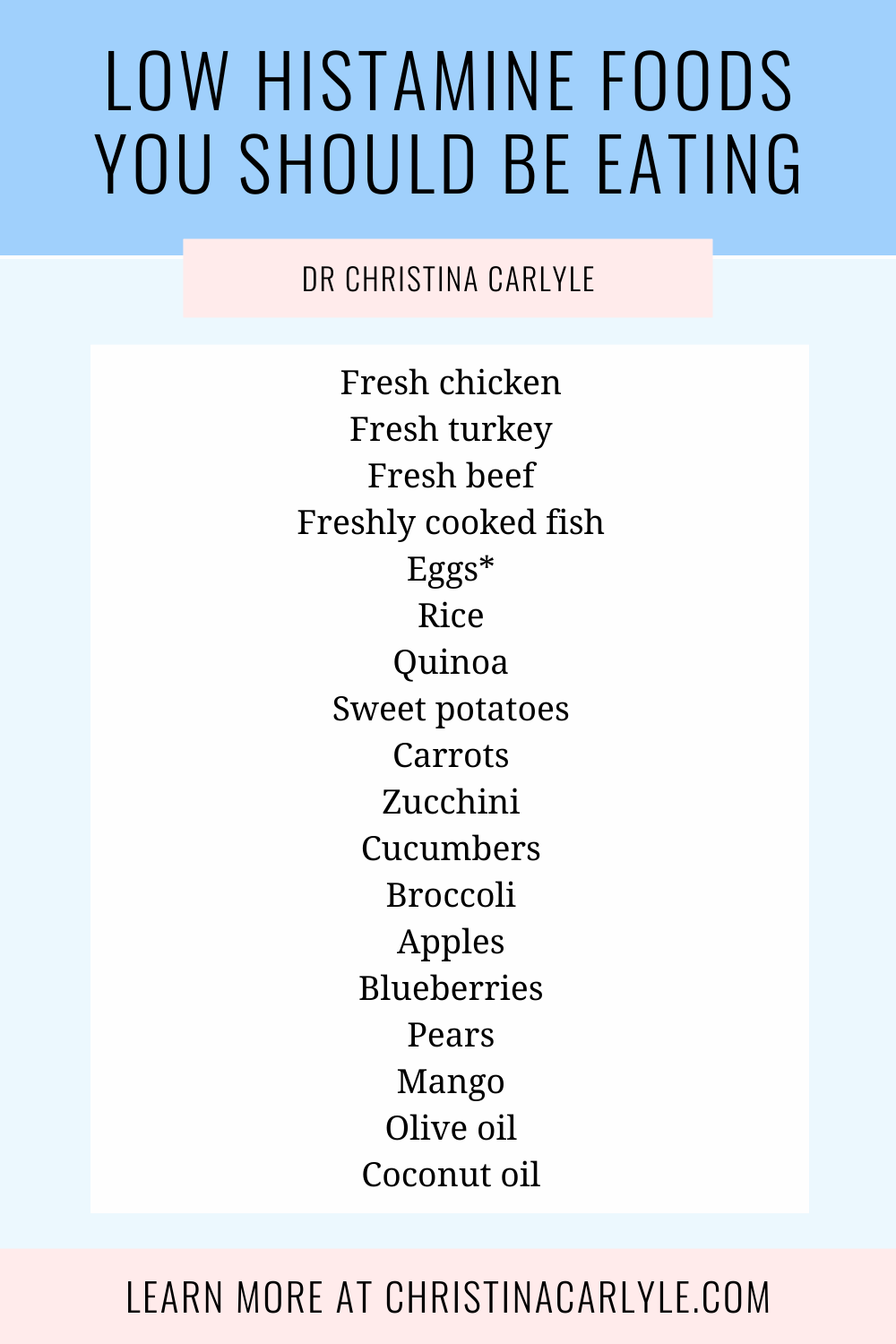
These foods tend to be easier for people with histamine sensitivity because they are fresh and have not undergone processes like aging, fermentation, or long storage.
If you want to see which foods are more likely to trigger symptoms, review this guide to foods high in histamine and then avoid those foods.
Why Fresh Foods Matter for Histamine
One of the most important factors when it comes to histamine tolerance is freshness.
Histamine levels tend to increase in foods as they age. This happens because bacteria break down amino acids in food and produce histamine as a byproduct.
This is why leftovers, slow-cooked meats, and foods that have been sitting in the refrigerator for several days can sometimes trigger symptoms even when the ingredients themselves are normally well tolerated.
Whenever possible, choose freshly prepared foods and avoid letting protein-rich foods sit in the refrigerator for long periods of time.
How to Build Low Histamine Meals
If you’re trying to reduce histamine reactions, simple meals made with fresh ingredients are often the easiest place to start.
Many of my clients do well with meals built around:
- A fresh protein source
- A whole food carbohydrate
- Fresh vegetables
- Healthy fats
For example, a meal might include grilled chicken, roasted sweet potatoes, sautéed zucchini, and olive oil.
The goal is not to restrict your diet forever. The goal is to temporarily reduce dietary histamine while you support the systems responsible for processing histamine in the body. Please note, not all proteins, carbs, veggies and fats can help clear histamine. For the best results eat the proteins, carbs, veggies and fats that match your unique metabolic type’s needs.
What To Do If Symptoms Continue
Reducing histamine-containing foods can help calm symptoms, but it rarely solves the entire problem.
Histamine intolerance usually develops because the body is struggling to break histamine down efficiently.
Supporting the enzymes responsible for histamine breakdown can help some people… especially those with a genetic enzyme deficiency. I explain more in this article about DAO supplements.
But the biggest improvements usually happen when you address the deeper factors affecting metabolism, gut health, detoxification, and inflammation.
If you want to start improving how your body processes food reactions and inflammation, take the Metabolic Type Quiz to discover which eating style best supports your metabolism. When you eat for your Metabolic Type you can get results SIGNIFICANTLY faster because you clear up all the root causes that cause histamine issues.
My Final Thoughts on Low Histamine Foods
Low histamine foods can help reduce symptom flare-ups while you work on healing the deeper imbalances that cause histamine buildup in the first place.
Fresh, whole foods are often the best place to start, especially when your body has been feeling reactive or inflamed.
But long-term progress comes from supporting the systems that regulate histamine in the body, including gut health, metabolism, and detox pathways.
Your body is designed to regulate inflammation and immune responses effectively when it has the right support.

Metabolic Type Meal Plan Results
Eating Healthy But Not Seeing Results?
The solution is eating for your unique metabolic type - When you eat foods that match your Metabolic Type you can lose weight and feel great 3 times faster. Take the Metabolic Type Quiz to discover your type and the meal plan that's best for you.
TAKE THE QUIZStart by nourishing your body with foods that help it function better and give it the tools it needs to restore balance.
If you liked this article, you’ll also like these posts
- Histamine Intolerance
- Histamine Allergy Symptoms
- High Histamine Foods
- DAO Supplements
- MCAS
- Natural Allergy Relief

Dr. Christina Carlyle is a Doctor of Functional Medicine, FDN-P, Nutritionist, & Trainer who transformed her body and health – getting off 7 medications and losing 40 pounds for good. Now, she helps other women get happy, healthy, and fit – quickly & naturally – without any BS