Last Updated on March 16, 2026
Histamine allergy symptoms can be incredibly frustrating because they rarely show up in just one obvious way.
Instead, histamine symptoms tend to look like a random collection of issues that don’t seem connected at all.
Maybe you’re dealing with sinus congestion that never quite clears up.
Maybe you get headaches or experience bloat after certain foods.
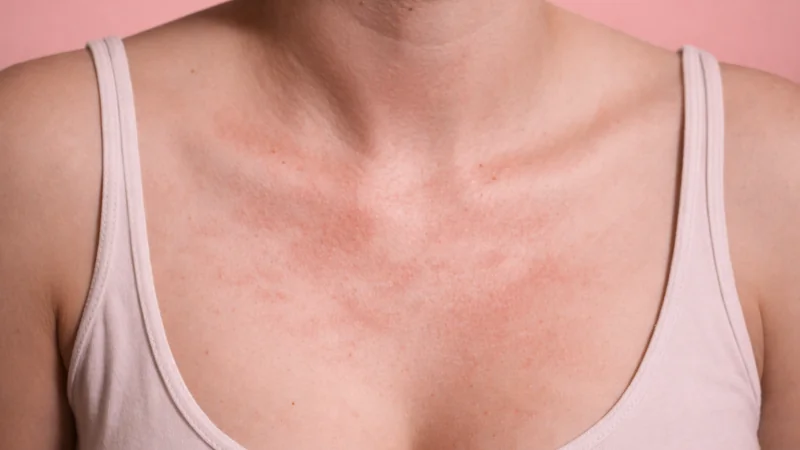
Maybe your skin gets itchy or flushed for no clear reason.
I see this pattern constantly with my clients. Friends and family members have dealt with it too. People often feel like their body has suddenly become more reactive, but they can’t figure out why.
If that sounds familiar, histamine could absolutely be part of the picture.
Today I’m sharing the most common histamine allergy symptoms I see with my clients, along with an explanation of why these symptoms happen and what may be driving them.
If you recognize several of these symptoms, it can be a sign that your body is struggling to break histamine down efficiently.
And once you understand what’s happening under the surface, it becomes much easier to figure out what to do next.
Table of Contents
- What Are Histamine Allergy Symptoms?
- Common Histamine Allergy Symptoms
- Why Histamine Symptoms Happen
- Why Histamine Symptoms Often Get Worse Over Time
- What To Do If You Recognize These Symptoms
What Are Histamine Allergy Symptoms?
Histamine allergy symptoms happen when histamine levels build up in the body faster than they can be broken down.
Histamine itself is a normal chemical produced by your immune system. It plays an important role in protecting your body and helping it respond to potential threats like allergens.
But when histamine accumulates, it can start triggering inflammation across multiple systems in the body.
That’s why histamine reactions don’t just affect one area.
Histamine can impact your sinuses, skin, digestion, nervous system, and even hormone balance. This is also why people often spend years chasing individual symptoms without realizing they’re connected.
If you want a deeper explanation of why histamine builds up in the first place, I explain that in detail in this article on histamine intolerance.
Common Histamine Allergy Symptoms
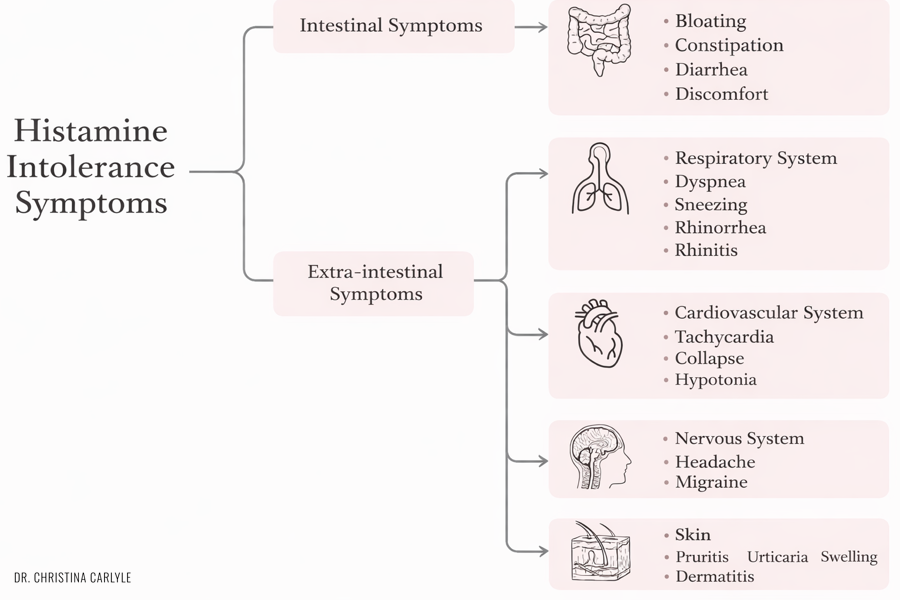
Histamine symptoms can vary from person to person, but there are several patterns that show up again and again.
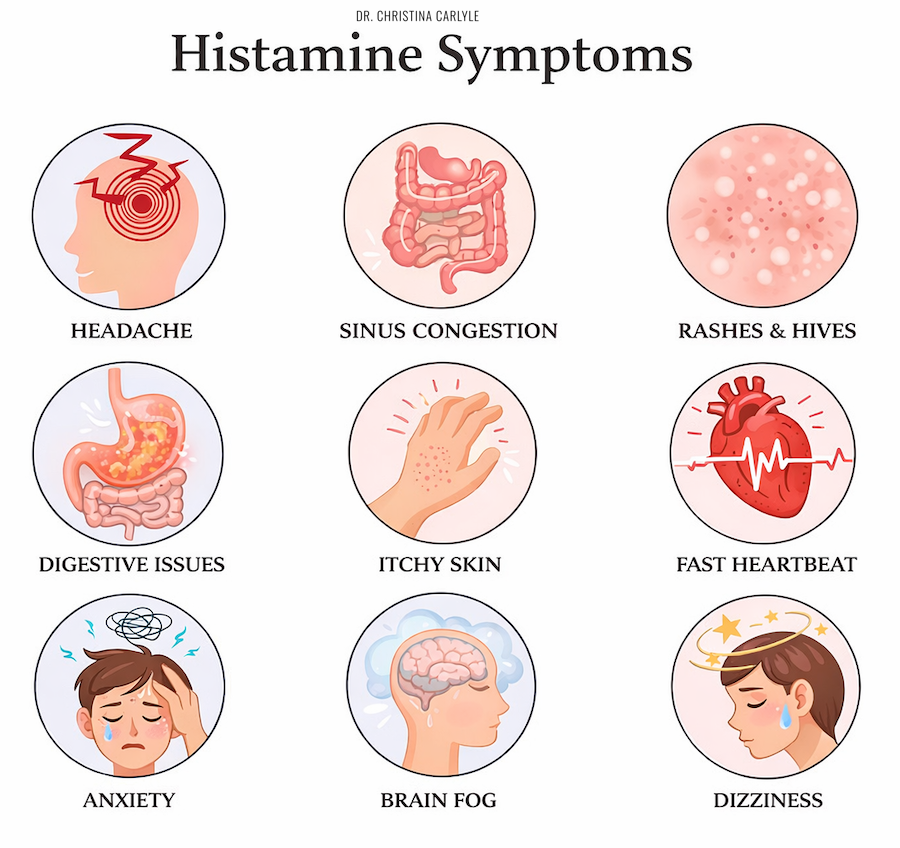
Some of the most common histamine allergy symptoms include:
- Chronic sinus congestion
- Runny or stuffy nose
- Frequent headaches or migraines
- Flushing or redness in the face
- Itchy skin
- Hives
- Rashes or eczema
- Bloating or digestive discomfort
- Diarrhea
- Heart palpitations
- Anxiety or feeling wired
- Brain fog
- Fatigue after eating certain foods
- Dizziness
- Difficulty sleeping
- Sensitivity to alcohol
Many people initially assume these symptoms are separate issues. But when we start looking at the bigger picture, histamine often connects the dots.
Why Histamine Symptoms Happen
Histamine symptoms typically happen when one of two things is occurring.
Either the body is producing too much histamine, or it’s struggling to break histamine down efficiently.
Several factors can contribute to this imbalance, including gut dysfunction, chronic inflammation, metabolic stress, and reduced enzyme activity.
Diet can also play a role.
Certain foods naturally contain higher levels of histamine, while others can trigger histamine release in the body. If histamine reactions are part of the picture for you, understanding dietary triggers can be helpful.
You can learn more about common triggers in this guide to high histamine foods, along with foods that are usually easier for people to tolerate in this list of low histamine foods.
Some people also benefit from supporting the enzyme systems responsible for breaking histamine down. I explain how those work in this article on DAO supplements.
Why Histamine Symptoms Often Get Worse Over Time
One of the most confusing things about histamine symptoms is that they often seem to develop gradually.
You may tolerate certain foods or environmental triggers for years before your body suddenly starts reacting.
This usually happens because the systems responsible for regulating histamine are under increasing stress.
Gut health may decline. Detox pathways can become overloaded. Chronic inflammation may build over time.
Hormones can also play a role. Histamine and estrogen influence each other in ways that can amplify symptoms, which is one reason many women notice allergy symptoms, headaches, or inflammation worsen around hormonal shifts.
I explain this connection in more detail in this article about histamine and estrogen.
In some cases, excessive histamine release can also be linked to conditions like mast cell activation syndrome (MCAS), where immune cells release histamine too easily.
What To Do If You Recognize These Symptoms
If several of these symptoms sound familiar, the first step is understanding what may be driving histamine buildup in your body.
Start by learning how histamine intolerance develops and what systems in the body regulate histamine levels. If you haven’t read it yet, this article on histamine intolerance walks through the underlying mechanisms.
From there, it can help to temporarily reduce dietary histamine while you work on repairing the root causes.
But the biggest improvements usually happen when you support the systems responsible for digestion, inflammation regulation, detoxification, and metabolism.
One of the most effective ways to start is by eating in alignment with your metabolic type.
Different bodies respond differently to food, and when you begin eating in a way that supports your metabolism, your body becomes much better at regulating inflammation and immune responses.
If you want to discover which nutrition strategy works best for your body, take the Metabolic Type Quiz.
My Final Thoughts on Histamine Allergy Symptoms
Histamine allergy symptoms can be incredibly frustrating, especially when they show up in ways that don’t seem connected.
But once you understand how histamine works in the body, those symptoms often start to make a lot more sense.
If your body has been feeling increasingly reactive, it may be a sign that the systems responsible for regulating inflammation and detoxification need support.
Start by learning your triggers, supporting your metabolism, and focusing on restoring the underlying systems that help your body process histamine effectively.

Metabolic Type Meal Plan Results
Eating Healthy But Not Seeing Results?
The solution is eating for your unique metabolic type - When you eat foods that match your Metabolic Type you can lose weight and feel great 3 times faster. Take the Metabolic Type Quiz to discover your type and the meal plan that's best for you.
TAKE THE QUIZYou deserve to feel good in your body again, and with the right support your body is absolutely capable of getting there.
If you liked this article, you’ll also like these posts
- Histamine Intolerance
- High Histamine Foods
- Low Histamine Foods
- DAO Supplements
- MCAS
- Natural Allergy Relief: Holistic Allergy Treatments that Work

Dr. Christina Carlyle is a Doctor of Functional Medicine, FDN-P, Nutritionist, & Trainer who transformed her body and health – getting off 7 medications and losing 40 pounds for good. Now, she helps other women get happy, healthy, and fit – quickly & naturally – without any BS